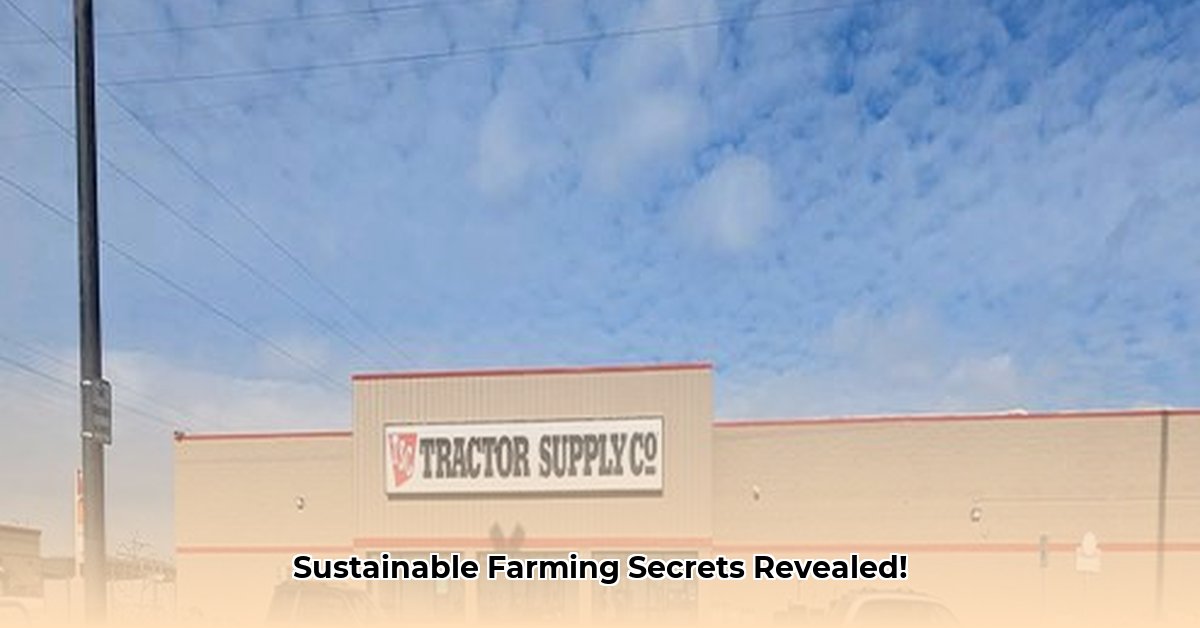
Tractor Supply Cedar Springs and Sustainable Agriculture: An Assessment
Tractor Supply (TSC) in Cedar Springs, Michigan, serves a vital role in the local agricultural community. However, the extent of its contribution to sustainable agriculture requires careful examination. This guide explores TSC's current offerings, identifies gaps in sustainable options, and provides actionable steps for stakeholders to foster a greener agricultural future in Cedar Springs. We will also consider the broader context of sustainable farming in the region and how TSC can better serve the needs of both farmers and consumers seeking environmentally responsible practices. For more information on Tractor Supply's impact, check out this related location.
What Tractor Supply Cedar Springs Offers (And Doesn't)
TSC Cedar Springs offers a broad range of agricultural supplies, from livestock feed to gardening tools. However, the availability and prominence of products specifically supporting sustainable farming practices remain a question. While organic seeds, composting supplies, and water-efficient irrigation systems may be available, their visibility and range compared to conventional options need improvement. The lack of clear, prominent sustainability certifications on many products hinders consumers in making informed choices. This is a key area for enhancement. How many farmers are even aware of the sustainable options, if present at all?
Sustainable Agriculture in Cedar Springs: A Regional Perspective
Cedar Springs enjoys a rich agricultural heritage. However, the degree to which local farms embrace sustainable practices requires further investigation. Understanding the prevalence of organic farming, water conservation techniques, and other environmentally friendly methods is crucial for assessing TSC's role and potential impact. Surveys, interviews with local farmers, and community discussions could provide valuable data to fill this information gap. What local initiatives already exist to promote sustainable farming? Are there collaborations between local farms and organizations championing environmental responsibility?
Actionable Steps for a More Sustainable Future: A Collaborative Approach
Building a more sustainable agricultural system in Cedar Springs demands a collective effort involving TSC management, local farmers, community organizations, and consumers. The following actionable steps can help:
For Tractor Supply Management:
- Conduct a Comprehensive Product Audit: Assess the entire product inventory, focusing on the availability and sourcing of sustainable options (organic seeds, compost, water-efficient irrigation, etc.). Prioritize clear and prominent labeling of sustainably sourced products. (Target Completion: Within 6 months)
- Develop a Sustainability Roadmap: Create a detailed, publicly accessible plan outlining specific, measurable, achievable, relevant, and time-bound (SMART) goals for enhancing sustainable product offerings and reducing environmental impact. (Target Completion: Within 1 year)
- Partner with Sustainable Suppliers: Actively seek out and collaborate with suppliers committed to sustainable manufacturing and sourcing practices. This will increase the availability of certified organic and environmentally friendly products. (Ongoing process)
- Invest in Staff Training: Ensure employees are educated about sustainable agriculture and readily available to guide customers in choosing environmentally responsible products. (Target Completion: Within 3 months)
For Local Farmers:
- Engage Directly with Tractor Supply: Communicate your need for specific sustainable products by contacting TSC management directly. This feedback directly influences purchasing decisions. (Ongoing process)
- Explore Cooperative Purchasing: Collaborate with other local farmers to negotiate bulk purchases of sustainable products, potentially leading to better pricing and increased availability. (Ongoing process)
- Participate in Educational Workshops: Attend workshops offered by TSC or community organizations to learn and share best practices in sustainable agriculture. (Ongoing process)
For Community Organizations:
- Partner with Tractor Supply for Educational Initiatives: Collaborate with TSC to offer workshops, educational materials, and community events that promote sustainable farming practices and healthy food systems. (Ongoing process)
- Advocate for Supportive Policies: Work with local government bodies to implement policies that support sustainable agriculture, such as tax incentives or grants for farmers adopting eco-friendly methods. (Ongoing process)
For Consumers:
- Make Informed Choices: Actively choose sustainable products whenever possible, supporting companies and farmers committed to environmentally responsible practices. Check for certifications like USDA Organic. (Ongoing process)
- Provide Feedback to Tractor Supply: Let TSC know that sustainable products are important to you. Positive feedback encourages further investment in these areas. (Ongoing process)
- Support Local Farmers Markets: Purchase produce directly from local farmers who use sustainable practices, furthering the demand for eco-friendly farming methods. (Ongoing process)
Conclusion: A Shared Vision for Sustainable Agriculture
TSC in Cedar Springs has the potential to play a significant role in advancing sustainable agriculture within the community. Realizing this potential requires shared commitment and collaborative efforts. By actively engaging in the steps outlined above, we can collectively create a greener, more sustainable future for Cedar Springs agriculture, ensuring the health of our land and the prosperity of our community. The combined efforts of farmers, consumers, community organizations, and TSC itself are critical for progress.